
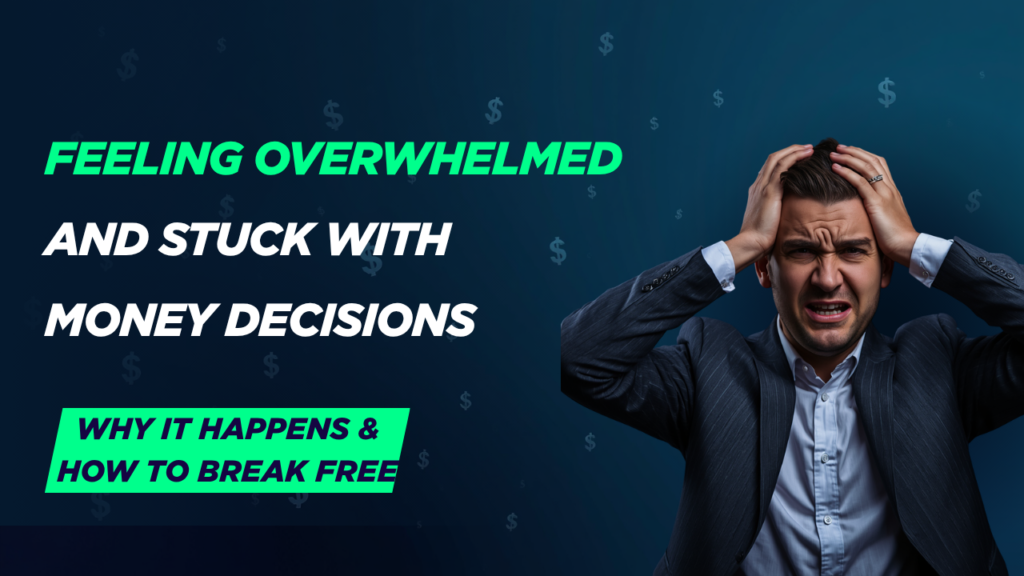


If you’ve ever stared at your bank account, credit card statement, or a stack of unopened bills and felt your chest tighten, you’re not alone. One of the most common struggles people face today is feeling overwhelmed and stuck with money decisions. It’s not just about numbers — it’s about emotions, uncertainty, and the pressure to “get it right” when the stakes feel incredibly high.
Money touches every part of life. It influences where we live, what we eat, how we raise our children, and how secure we feel about the future. So when financial decisions pile up — whether it’s choosing between paying off debt or saving, deciding how much to invest, or simply figuring out how to stretch a paycheck — it’s no wonder so many people freeze.
As someone who has spent years helping individuals and families navigate personal finance, I can tell you this: feeling stuck is not a sign of failure. It’s a sign that you need clarity, structure, and a plan that feels doable. This article will help you understand why financial overwhelm happens and how to move forward with confidence.
If you’re ready to take the next step toward financial freedom, I have something that will help you get there.
Download my guide for The Financial Freedom Action Workbook here!
It’s your step‑by‑step roadmap to making confident money decisions, building stability, and finally taking control of your financial future.
Why Money Decisions Feel So Overwhelming
Financial overwhelm rarely comes from one single issue. It’s usually a combination of emotional, psychological, and practical factors that build up over time.
- Too Many Choices, Not Enough Guidance
We live in a world where financial advice is everywhere — TikTok, YouTube, blogs, podcasts, books, and well‑meaning friends. But more information doesn’t always mean better decisions. In fact, it often leads to decision paralysis.
Should you:
Pay off debt first?
Build an emergency fund?
Start investing?
Save for retirement?
Increase your income?
When everything feels urgent, it becomes impossible to know where to start.
- Fear of Making the Wrong Move
Money mistakes can feel permanent. People worry that:
Investing at the wrong time will cost them
Paying off debt too slowly will trap them
Saving too little will leave them unprepared
Spending on themselves is irresponsible
This fear creates hesitation, and hesitation creates stagnation.
- Emotional Baggage From Past Money Experiences
Many people carry financial shame — from overspending, debt, job loss, or simply not being taught how to manage money. This emotional weight makes even simple decisions feel heavy. - Living Paycheck to Paycheck
When every dollar already has a job, there’s no room for error. This creates constant stress and makes long‑term planning feel impossible. - Lack of a Clear System
Without a structure — a budget, a plan, a set of priorities — money decisions feel random. And randomness breeds overwhelm.
The Hidden Cost of Staying Stuck
Feeling overwhelmed doesn’t just affect your finances. It affects your mental health, relationships, and overall quality of life.
People who feel stuck with money decisions often experience:
Anxiety or guilt around spending
Avoidance of financial tasks
Difficulty sleeping
Strained relationships
Loss of confidence
The longer you stay stuck, the harder it becomes to take action. But the good news is that overwhelm is not permanent — and you can break out of it with the right approach.
How to Break Free From Financial Overwhelm
Here’s the truth: you don’t need to fix everything at once. You just need to take the next right step. Below are practical, expert‑backed strategies to help you move forward.
- Start With Clarity, Not Perfection
Before you can make good decisions, you need a clear picture of your financial reality. This means knowing:
What you earn
What you owe
What you spend
What you own
Most people avoid this step because they fear what they’ll find. But clarity is empowering — it turns the unknown into something you can work with.
- Choose One Priority at a Time
Trying to tackle everything at once is the fastest path to burnout. Instead, choose one primary goal for the next 30–90 days.
Examples:
Build a $500 emergency fund
Pay off one credit card
Track spending for 30 days
Save for a specific purchase
Start investing a small amount
When you focus on one goal, progress becomes visible — and visible progress builds momentum.
- Create a Simple, Sustainable System
You don’t need a complicated budget. You need a system that works for your lifestyle.
Some options:
Zero‑based budgeting (every dollar has a job)
50/30/20 method (needs/wants/savings)
Pay‑yourself‑first (automate savings)
Cash envelope system (great for overspenders)
The best system is the one you’ll actually use.
- Automate What You Can
Automation removes stress and reduces decision fatigue. You can automate:
Bill payments
Savings transfers
Debt payments
Retirement contributions
When money moves automatically, you make progress without thinking about it.
- Build a Small Emergency Buffer
Even $300–$500 can dramatically reduce financial anxiety. It creates breathing room and prevents small setbacks from becoming crises. - Learn to Separate Emotion From Action
Money is emotional — but decisions should be strategic. When you feel overwhelmed:
Pause
Breathe
Step away
Return with a clear mind
This prevents panic‑based decisions and helps you stay grounded.
- Use Tools That Make Decision‑Making Easier
This is where structured resources like financial workbooks, planners, and guided exercises become powerful. They turn vague goals into actionable steps and give you a roadmap to follow.
This is exactly why tools like The Financial Freedom Action Workbook exist — to help you move from confusion to clarity with guided prompts, worksheets, and step‑by‑step planning.
Final Thoughts: You’re Not Behind, You’re Just Beginning
Feeling overwhelmed and stuck with money decisions doesn’t mean you’re bad with money. It means you’re human. It means you care. And it means you’re ready for change.
The moment you take one small step — even reading this article — you’re already moving forward. Financial confidence isn’t built overnight. It’s built through clarity, consistency, and support.

 April 14, 2026



Leave Comment